I thought I’d take a slight detour and share my insights into VC and my observations of John Doerr’s prolific career as a premier venture capitalist.
If you’re unfamiliar with his name, you’re undoubtedly familiar with his investments. Among his many successes, he led early investments in Google, Amazon, and Intuit as a partner with Kleiner Perkins, a legendary Silicon Valley venture firm. John has an incomparable scale and depth of knowledge, while I’ve only dabbled in venture capital occasionally, so there is no comparison there. Plus, he’s a billionaire several times over, and, well, I’m not. But we share one career similarity: We both pivoted toward energy and climate late in our careers.
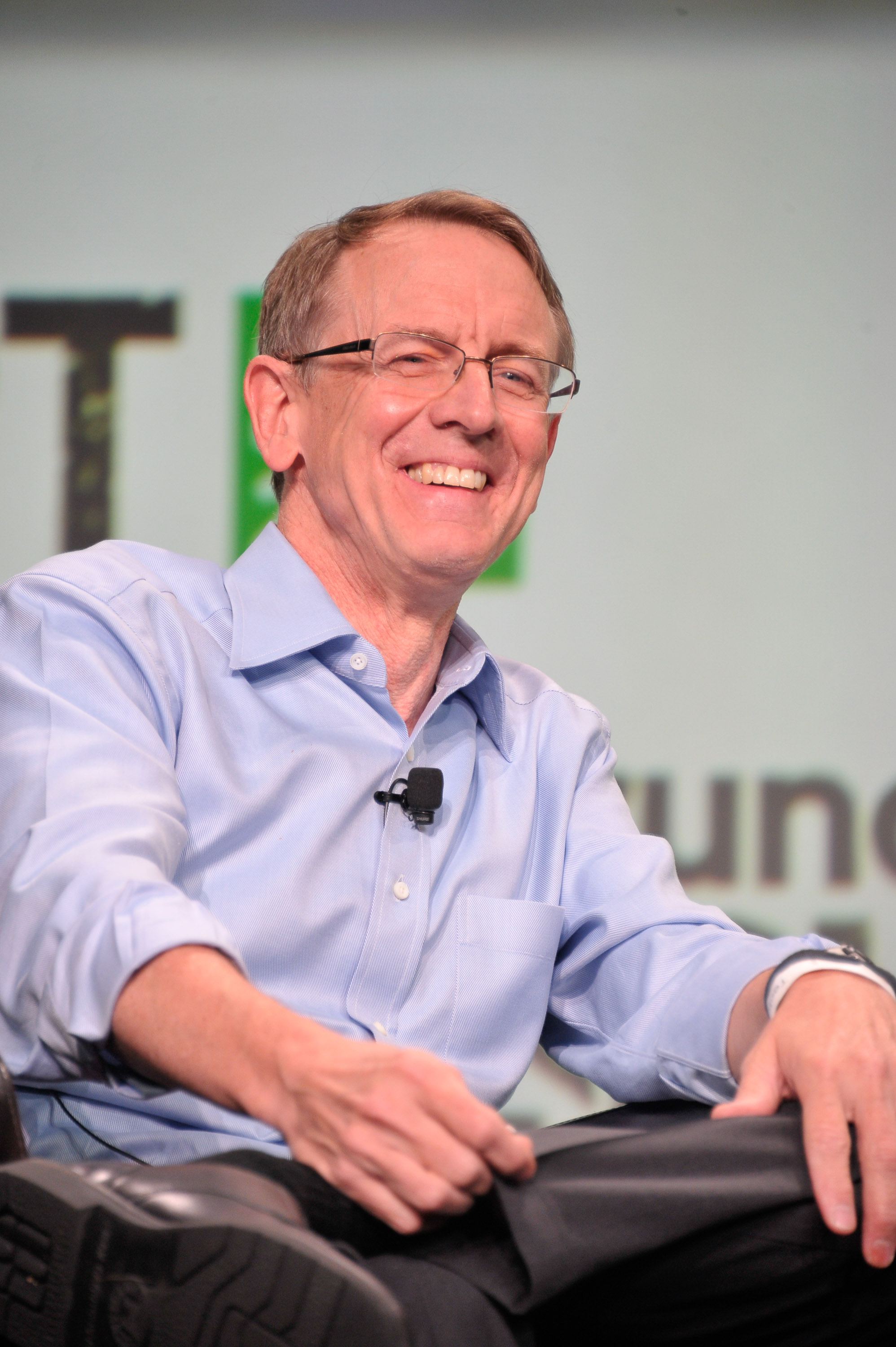
More on John in a bit.
I entered the “energy” field from conventional biopharmaceuticals and a mid-career emphasis on the business side of science. This transition gave me a fascinating perspective on how intelligent but otherwise disconnected individuals react to existential problems and their possible solutions. In biopharma, I worked on prospective treatments for disease. At cocktail parties, the reaction was (to paraphrase), “That’s great! I hope I never need it, but it’s nice to know someone is working on the problem. Keep up the good work! [turning to another guest] Did you watch the latest [reality series] episode? Can you believe what [star] did?”
When I moved to “energy” in 2010, suddenly, I was working on something that impacted everyone every day. Then, the reaction was, “Gas is too expensive. Have you thought about extracting energy from hair? When I go to the salon, there’s a load on the floor, and they throw it out. Maybe you should consider it. Oh, and do you think I should put solar panels on my roof?” [True story].
My point is that public opinion is irrelevant regarding cancer treatments but moves front and center regarding energy. Everyone is impacted by energy, and everyone naturally has a view of what affects them daily and in their immediate future. The change in professional focus was rewarding, on the one hand, because non-specialists cared enough to engage. On the other hand, it was irritating because the problem seemed much simpler to everyone than it is in reality. This characteristic leads to a surplus of poorly thought-out (or even wacky) solutions that even otherwise well-grounded individuals pursue.
Back to Mr. Doerr: I was vaguely aware of John before my career pivot only because Kleiner invested in my first startup company, Pharmacopeia, and his partner, Brook Byers, was a member of the company’s Board of Directors. But, when I joined ARPA-E in 2010, one of the foundational documents was a report by the American Energy Innovation Council titled “A Business Plan for America’s Energy Future”. John (along with Bill Gates and Jeff Immelt of GE) was a council member. We treasured this document because it strongly recommended that Congress fund ARPA-E to $1B (Note: The Agency got $180M in 2011 and has yet to cross the 500M mark). Many of these accomplished professionals dropped by occasionally to advise the nascent energy, and I met John in person on one such occasion.
By the time I pivoted in 2010, John was already deep into climate and energy. Watch his TED Talk 2007
here
, and you’ll see what I mean. The turning point, for him, happened during an after-dinner family discussion about Al Gore’s
horror film
documentary “An Inconvenient Truth”:
The conversation came to my 15-year-old daughter, Mary. She said, "I agree with everything that's been said. I'm scared and I'm angry." And then she turned to me and said, "Dad, your generation created this problem; you'd better fix it."
This prompted John to shift his focus from software to cleantech. And, here’s where the parallels begin—We have children about the same age and share an existential concern about the future of our planet as an extension of parental responsibility. That concern, at least in part, motivated our respective career pivots. But, as it turns out, fifteen-year-old Mary Doerr was not entirely accurate: John’s generation (and mine) didn’t create the problem; It preceded us by several generations. Consider that about half of the carbon (give or take) emitted by James Watt’s steam engine in 1769 still hangs in the atmosphere today. In another sense, though, Mary was spot on (both in 2007 and today): We haven’t done anything (yet) to fix the problem. And now, it’s her generation’s problem too.
John’s impulse was to hire former VP Al Gore and turn the Kleiner machine toward cleantech venture investing. And who can blame him? Before 2007, Kleiner had Midas’ touch when it came to disruptive entrants into established verticals, and given the size of the energy markets, this could be the opportunity of a lifetime. Indeed, in his TED Talk, he asserted, “Going green is bigger than the Internet. It could be the biggest economic opportunity of the 21st century.”
But, as the subtitle for this installment suggests, I firmly believe that venture capital is an unworkable model for the transformation in energy we need. Indeed, Kleiner’s shift in focus meant it missed both Facebook and Twitter. Instead, by 2013, it had plowed cash into 88 different cleantech companies, including Fisker Automotive (bankrupt in 2014, assets sold to a Chinese company) and renewable chemicals company Amyris (NASDAQ: AMRS, trading in the penny stock range and may soon be delisted). None of those companies approached the level of success Kleiner had promised its limited partners, so John stepped away from active investing in 2016, leaving Kleiner’s reputation damaged.
That same year, in an undoubtedly painful turn, John’s alma mater Harvard Business School published a case study entitled Weathering the Storm: Kleiner Perkins and the Tragedy of Clean-Tech Venture Capital . This study points out several shortcomings of Kleiner’s approach and proposes potential strategies for future efforts, including focusing on consumer products and software and providing 15-year lifetimes for cleantech funds.
Even if implemented in the latest surge of cleantech funds, none of these fixes will achieve what’s truly needed—restructuring the world’s energy and climate futures. The issues are more fundamental: Energy supply (together with previously emitted carbon, the crux of the climate problem) is a ginormous market with narrow profit margins, long adoption cycles, and a nearly unimaginable scale that favors incumbents. Venture capital math 1 does not work under any of these conditions, let alone all three. Can clever business models generate attractive returns? Sure. But will such creative approaches change the outcome that is already happening? Highly unlikely. The unfortunate modern gestalt is that venture returns can still be made based on innovation by small, clever founding teams, and this framing has closed our eyes to the need to act immediately and at scale.
John went on to pivot, yet again, toward philanthropy. Still feeling the sting of his daughter’s words, he pledged over a billion dollars to Stanford University to found the School of Sustainability, aimed at creating “a future where humans and nature thrive in concert and perpetuity.” [That’s some guilt trip Mary put on him!] But, it’s a good use of his accumulated wealth, and his generosity should be applauded, along with other billionaires like Bill Gates (the Gates Foundation and Breakthrough Energy) and Jeff Bezos (the Climate Pledge and the Bezos Earth Fund). In addition, he has put his plan in writing (“Speed and Scale”) so that it could sit on my bookshelf along with Bill Gates’ contribution (“How to Avoid a Climate Disaster”). [I’m waiting for Jeff Bezos’ book to complete my trifecta.] The meta-message is this: Money isn’t enough to solve the problem, and even the smartest, most well-connected technicians cannot move the needle.
As for me, the jury is still out on the results of my initial pivot, but it’s looking just about as effective as John’s. My main ARPA-E program PETRO (which focused on genetic engineering to improve energy capture by plant life) begat a program called RIPE (Realizing Improvements in Photosynthetic Efficiency), which is currently supported by the Gates Foundation. I have to admit to an error in judgment—Progress in agricultural technology, particularly when it comes to genetic modifications, is intrinsically slow and hamstrung by public perceptions and oppositional marketing. While the progress I funded may bear fruit at some future date, it’s unlikely to happen in time to make a difference.
I’ve now pivoted to exploring the connection between the atmosphere and the biosphere, most beneficially by increasing the amount of irrigation water available for farming. This approach can work before it’s too late, but I can’t make it happen alone. If anyone has a spare billion or so, let’s talk!
Rule of thumb: To attract VC investment, a proposal should address an enormous opportunity (generally >$1B) and provide a path toward a ten-times return-on-investment in 3-5 years. This means the company’s value to an acquirer must double every year. Of course, there are exceptions, but narrow margins (high cost of goods relative to price) make it hard to grow, let alone that quickly!